
Power Flushing in London
Professional central heating power flush to remove sludge, rust, and magnetite. Restores radiator efficiency, eliminates cold spots, and protects your boiler. Available across all London postcodes.
View service →By Ralf — Gas Safe Registered Engineer | 10 January 2026 | Power Flushing
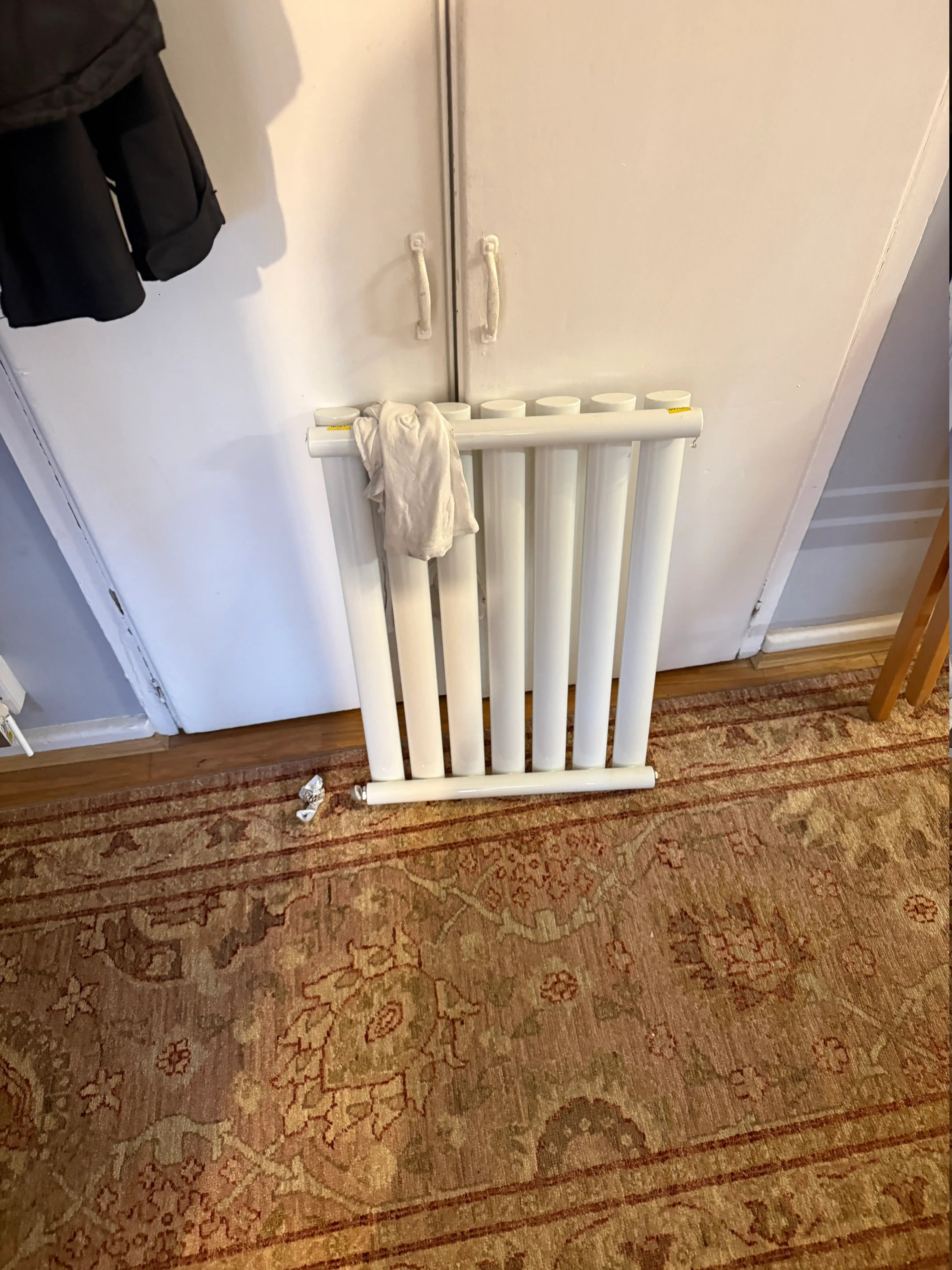
A residential property in Kensal Town, W10 was suffering from cold spots across multiple radiators and rising gas bills. The cause: years of sludge and magnetite buildup inside the central heating system. Ralf attended to carry out a full professional power flush and full radiator check — both the designer column radiator and the standard panel radiators throughout the property.
Every central heating system gradually accumulates sludge and magnetite — a black iron oxide compound produced as steel radiators corrode over time. In a typical London property, this process begins from the day the heating system is first filled. Without a magnetic filter to capture particles, and without periodic flushing, the deposits circulate continuously and settle in the lowest points of the system: the bottom of radiators, bends in pipework, and — most critically — the boiler heat exchanger.
Older London properties with cast-iron radiators and lengthy pipework runs are particularly susceptible. The greater the number of steel components in the circuit, the faster magnetite accumulates. In Kensal Town, W10, as across much of West London, the housing stock is predominantly Victorian and Edwardian terraces with pipework that has been in place for decades. These systems may never have been chemically treated.
The homeowner in W10 had noticed the classic signs over several months: cold spots at the bottom of each radiator while the tops heated normally, the boiler running for longer than expected to bring the house up to temperature, and gas bills that had risen steadily without any obvious explanation. When Ralf bled the radiators on arrival, the water ran dark brown — confirming significant iron oxide contamination throughout the system.
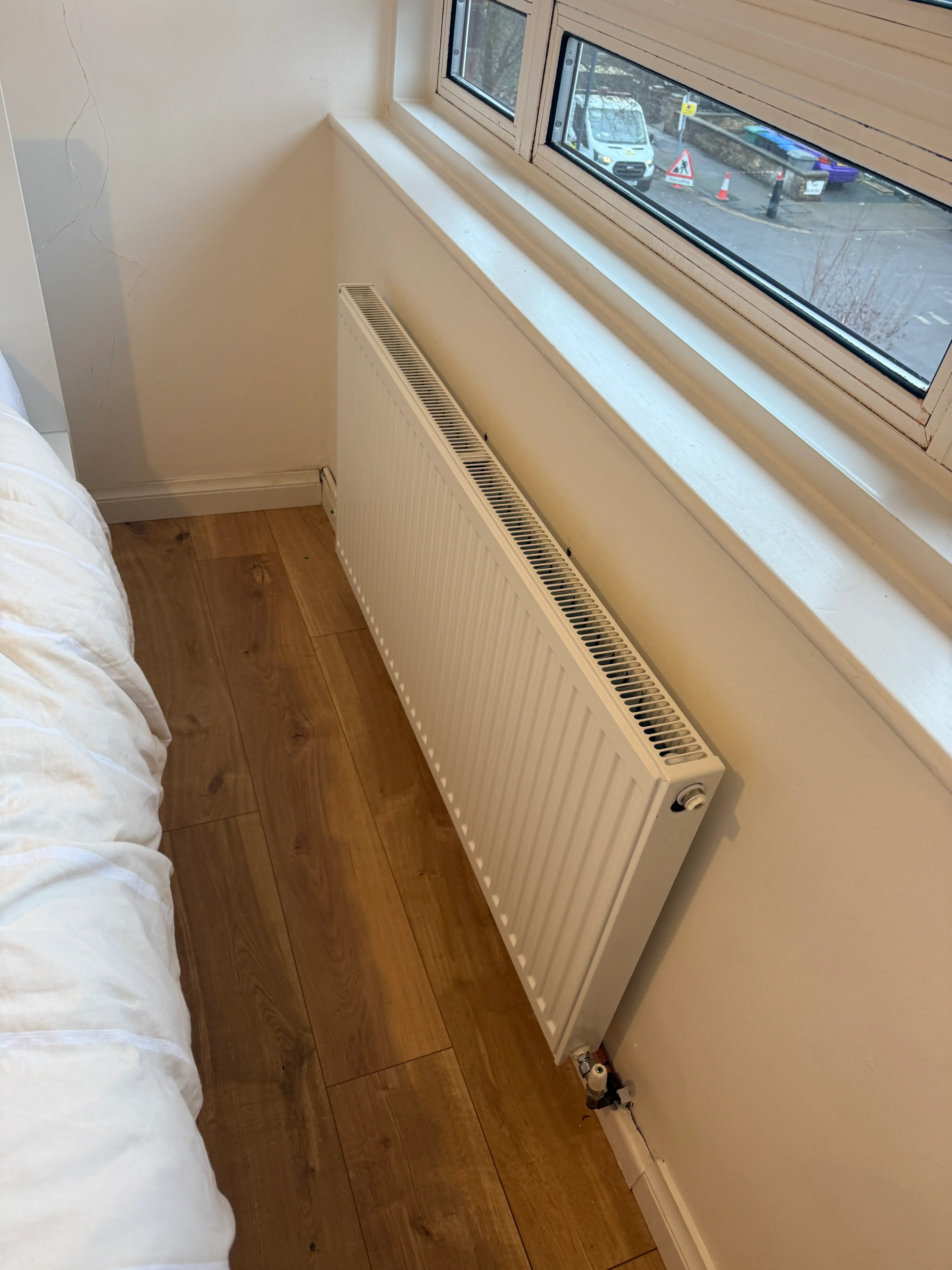
Ralf began by measuring flow and return temperatures at every radiator in the property. This identifies the worst-affected units and gives a baseline against which to measure the outcome at the end of the job. The radiators with the greatest temperature differential between flow and return are the ones where blockage is most severe.
The power flush machine was connected to the system via the pump head. A Fernox system cleanser was added and circulated through the full circuit to break down sludge and loosen scale deposits from internal surfaces. The machine then forced high-velocity water through each radiator individually, with each unit isolated in sequence while the contaminated water was flushed to drain. The process continued on each radiator until the outlet water ran clear.
The boiler heat exchanger was also flushed separately — sludge concentrates here because of the elevated temperatures and reduced flow in a contaminated system, and it must be cleared to restore full efficiency.
Once the system was clean, a long-life inhibitor was added to protect against future corrosion, and a Fernox TF1 magnetic filter was fitted on the return to capture any residual particles before they can reach the boiler. Every radiator — both the designer column and the standard panel radiators — was checked individually for even heat distribution from top to bottom before Ralf left.
A common misconception is that designer or column radiators are somehow more resistant to sludge buildup than standard panel radiators. They are not. In fact, the complex internal geometry of a column radiator — with its multiple individual columns and connecting waterways — can trap debris more readily than the simpler internal channels of a flat panel radiator.
Sludge settles where flow slows, and the internal passages of a column radiator create exactly those conditions. The visible result is cold columns within the radiator body while others heat normally — a pattern that is easy to mistake for a balancing problem when the real cause is localised blockage. A professional power flush clears these passages as effectively as it does in any other radiator type.
The age or style of the radiator makes no difference to the need for periodic flushing. Whether the system contains modern flat panels, traditional cast-iron radiators, or contemporary column designs, sludge accumulates in all of them at the same rate.
For a well-maintained system fitted with a magnetic filter, a power flush is typically needed every five to eight years. Without a magnetic filter, contamination builds up faster and a flush may be needed sooner.
There are three situations where a power flush should be carried out regardless of when the last one was done. First, before any new boiler installation — most manufacturers including Vaillant, Worcester Bosch, Ideal, and Baxi require a clean system as a warranty condition, and fitting a new boiler onto a contaminated system begins degrading the heat exchanger from the first day of operation. Second, if cold spots appear on radiators that were previously heating evenly. Third, if the water bled from a radiator runs dark brown or black rather than clear.
If you are unsure whether your system needs a flush, call 07472 251465 and Ralf will assess the system before making any recommendation. He will bleed the radiators, check the water colour, measure temperatures across the system, and give an honest verdict on whether a flush is necessary and worthwhile.
Pristine Gas Ltd is based in Holborn, WC1N and covers all West London postcodes including W10, W9, W11, and W12. For Maida Vale W9 and the surrounding postcodes, Ralf can typically attend within a short travel time of the call.
For a professional central heating power flush in Kensal Town, W10, or anywhere across West London, call 07472 251465.
Call Pristine Gas Ltd on 07472 251465. Professional central heating power flushing across all London postcodes.
Professional central heating power flush to remove sludge, rust, and magnetite. Restores radiator efficiency, eliminates cold spots, and protects your boiler. Available across all London postcodes.
View service →A power flush is required before any new boiler installation to protect the warranty. We carry out both services together for a complete system upgrade.
View service →How a clogged system contributed to heat exchanger failure in NW9. Why regular power flushing prevents the most expensive boiler repairs.
Read article →Why a system flush is essential before fitting a new boiler — what Ralf did to protect the new installation in E14.
Read article →